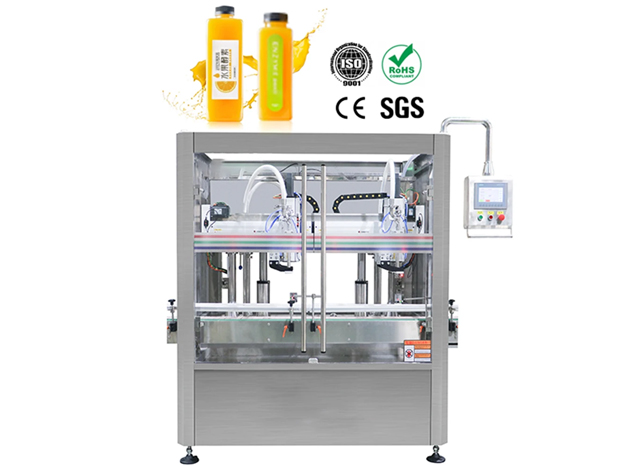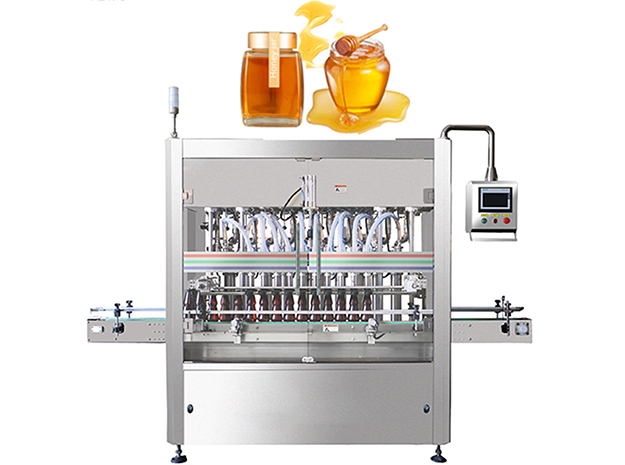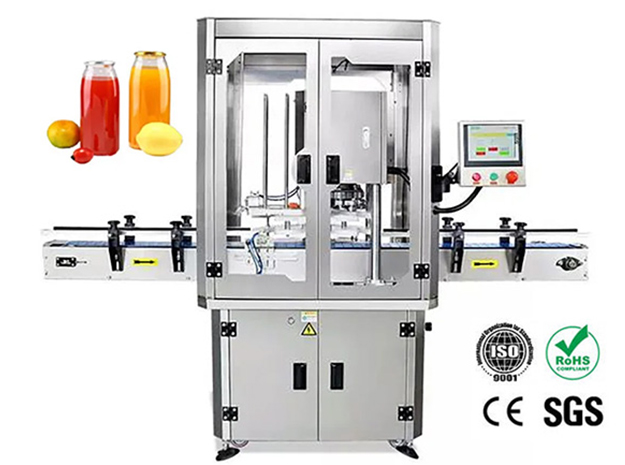
A growing conflict exists in the packaging machinery industry: customers increasingly demand unique, tailored solutions, yet many suppliers stick to "business as usual" when quoting prices. A procurement manager in the food packaging sector put it bluntly: "I contacted three suppliers; two simply sent me a price list for standard models, while only one asked me a dozen questions." He ultimately chose the supplier that asked questions—not because they were cheaper, but because their proposed solution was actually viable.
The consequences of casual quoting often only surface after the contract is signed. A standard model priced at 200,000 yuan might sound competitive. However, if the customer produces uniquely shaped bags, they may need to add forming molds, adjust sealing angles, and integrate the machine with their existing MES system. These "extras" could add another 150,000 yuan to the cost and delay delivery by two months. Even worse, the equipment might arrive on-site only to prove incompatible with the customer's new packaging materials; changeover times could balloon from a promised 10 minutes to 40 minutes, slashing production capacity by 30%. At that point, the customer won't remember the low initial quote; they will simply remember that the supplier was unprofessional.
The requirements for customized equipment often lie in details the customer hasn't explicitly stated. A responsible pre-quote consultation must clarify several key points: What form does the product take—powder, granule, liquid, or solid? Will the packaging use pre-made bags or roll film? What is the range of dimensions, and how great is the disparity between the smallest and largest sizes? What is the cycle time of the existing production line, and will the new equipment be integrated into that line or operate independently? What are the spatial constraints (length, width, height) of the workshop? What is the skill level of the operators? The answer to each of these questions affects the equipment's structure, control system, changeover method, and final price. Quoting without clarifying these details essentially shifts the risk onto the customer.
Changeover time is the cost factor most easily underestimated in customized equipment. Traditional, general-purpose equipment is often ill-suited for uniquely shaped containers or small-batch orders—with compatibility rates below 40%—and the machine adjustment process alone can waste 15% of daily effective production capacity. A carton factory once complained about a frustrating experience: they spent 200,000 yuan on an imported slotting machine, only to find that small-batch orders accounted for 60% of their volume. Each machine setup took over 20 minutes, and irregular box shapes required repeated trial-and-error adjustments. If a supplier fails to fully understand a customer's order structure—SKU count, batch sizes, and changeover frequency—before quoting, they might recommend a machine that is fast but slow to reconfigure; the customer only realizes later that their production capacity is being consumed by setup times.
The accuracy of a quote depends on how deeply the supplier understands the customer's operational rhythm. A manufacturer of packaging equipment for food companies explicitly stated in its proposal responses that every specific model is "custom-built based on the food's form, packaging dimensions, and required packaging speed." This means the quote isn't simply a model selected from a catalog, but a configuration reverse-engineered from the customer's production environment. When customers add capacity or change product forms and find existing equipment incompatible, they tend to place orders based on specific needs rather than initiating a new tender process. If a supplier demonstrates an understanding of the customer's business during initial discussions, their quote is far more likely to succeed.
Modular design and data integration are making the effort to "diligently inquire about requirements" increasingly rewarding. One carton factory adopted an integrated hardware-software customization solution, reducing setup time for a single SKU from 18 minutes to 2 minutes and cutting the slotting defect rate from 3.2% to 0.5%. Another factory used a SCADA system to integrate data from 12 machines, enabling early fault warnings and reducing losses from a single production line stoppage by nearly 90%. These results were only possible because the supplier had thoroughly assessed the customer's equipment data interfaces, failure history, and production cycle times during the proposal phase. Every question asked before quoting lays the groundwork for performance after delivery.
For highly customized equipment, quotes cannot be based on guesswork. Customers do not want a simple price list; they want a solution that works seamlessly within their production environment. Suppliers willing to ask a dozen extra questions before quoting are far less likely to face a dozen extra problems after the contract is signed. Henan Mingtan specializes in the manufacturing, customization, and sales of packaging machinery. We have successfully delivered tailored solutions for hundreds of clients. If you require packaging machinery, please leave us a message to get in touch.