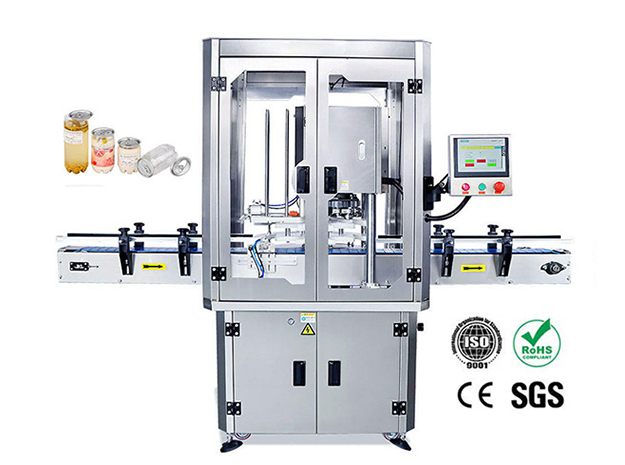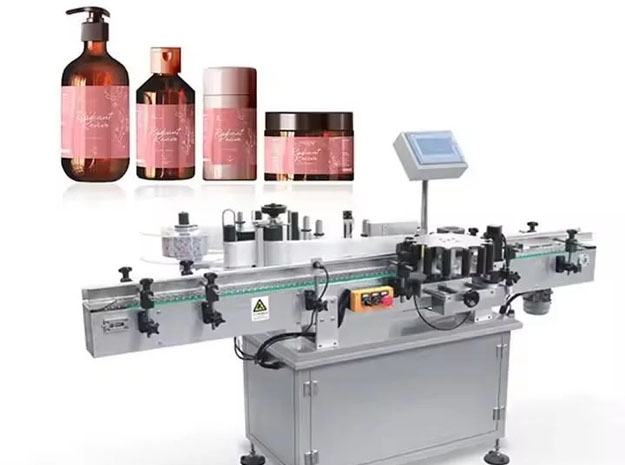
On packaging production lines, there's a step that's often underestimated, yet ubiquitous—capping.
It seems simple—just screwing a cap onto a bottle. But this seemingly simple action is quietly eroding the profits, efficiency, and brand reputation of countless factories. Today, let's discuss: From manual tightening to fully automated capping, what exactly is your production line wasting?
I. The Era of Manual Tightening: The Invisible "Hidden Killer"
In many small and medium-sized factories or on outdated production lines, manual cap tightening remains the norm. A skilled worker repeats the cap-tightening action thousands of times a day. Wrists ache, fingers go numb, and efficiency declines.
But the problem goes far beyond that. What's the biggest hidden danger of manual tightening? **Instability**.
Some people tighten it tightly, some loosely; they tighten it when they're energetic in the morning, but start cutting corners when they're tired in the afternoon. A bottle of mineral water might be fine to open by hand; but a bottle of essential oil, a sauce, or a pesticide—a slightly loose cap can mean leakage, oxidation, or even the entire batch being returned.
Statistics show that **over 30% of packaging complaints are directly related to improper sealing**. And the vast majority of this 30% stems from the uncertainty of manual operation.
II. What does "the last second" mean?
The "last second" mentioned in the title is a metaphor. It refers to the seemingly insignificant yet crucial time difference saved by upgrading from semi-automatic or manual operation to a fully automatic capping machine.
Let's do the math:
- Manual capping: Average 3-5 seconds per bottle (including picking up the cap, aligning, tightening, and placing)
- Semi-automatic capping: 2-3 seconds per bottle (manual bottle placement, machine capping)
- Fully automatic capping: 0.5-1 second per bottle (fully automated process)
On the surface, it seems like only a second or two difference per bottle. But what if your production line produces 50,000 bottles a day?
50,000 bottles × 2 seconds = 100,000 seconds ≈ 28 hours
That means a single capping station wastes more than a full day's worth of work time. In terms of labor costs, that's equivalent to the full-day labor of 3-4 workers. And this doesn't even include the efficiency losses due to fatigue, shift changes, and training.
III. How does a fully automatic capping machine "reclaim" that one second?
The value of a fully automatic capping machine is far more than just speed. It's a complete solution of **precision + speed + stability**.
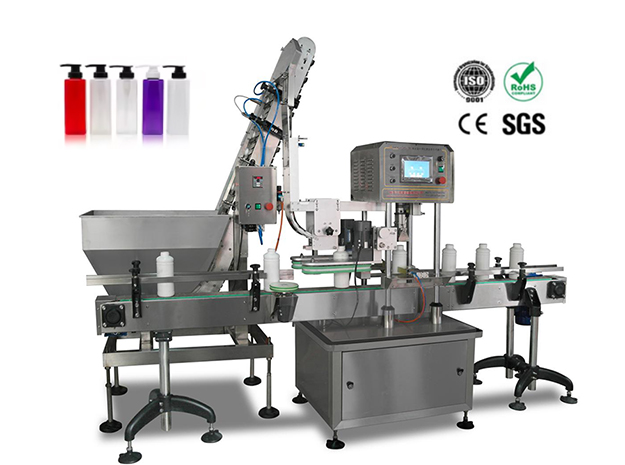
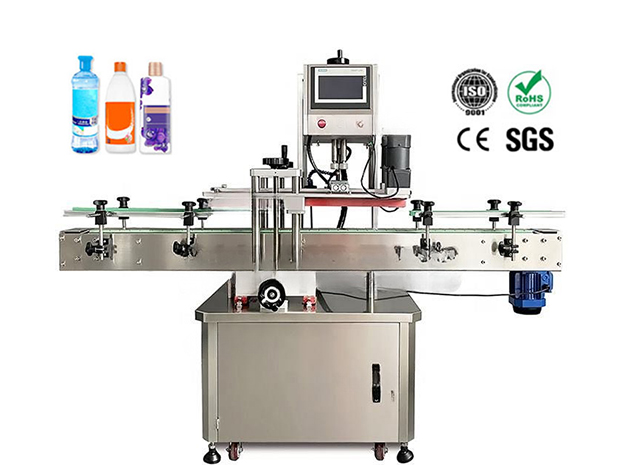
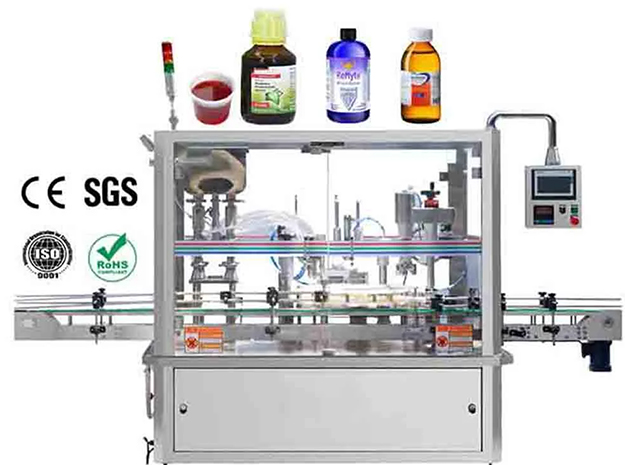
First, continuous bottle feeding, without interruption. Fully automatic capping machines are typically linked with filling and labeling machines. Bottles continuously enter via a conveyor belt, are automatically positioned by photoelectric sensors, and the capping head completes the operation while in motion. There is no waiting, no idle running.
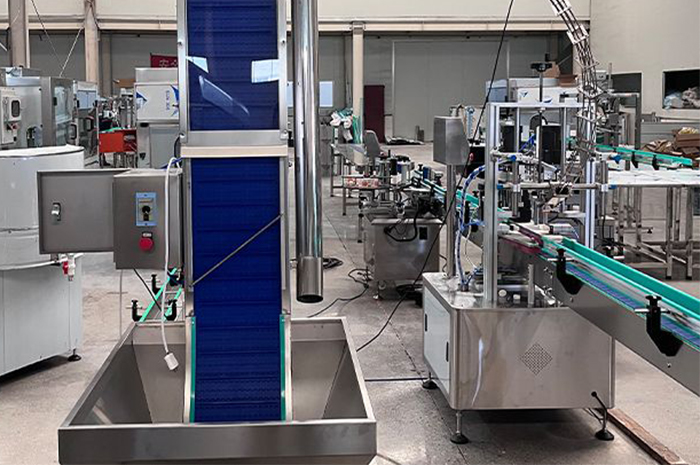
Second, automatic cap feeding, without interruption. Through cap feeders, elevators, and other devices, bottle caps are automatically sorted, oriented, and transported to the area below the capping head. Workers only need to replenish the cap bin periodically, completely eliminating the inefficient "one hand holding the cap, the other twisting" method.
Third, torque is precisely controllable. **This is the core technological advantage of the fully automatic capping machine.** Whether using friction, gripping, or magnetic torque capping heads, the torque value can be precisely set. It automatically stops when too tight and automatically compensates when too loose, ensuring almost perfect consistency in the tightness of each bottle.
Fourth, defective products are automatically rejected. **Advanced capping machines are also equipped with torque detection, height detection, and even visual inspection systems. Crooked caps, stripped caps, and missing caps are all identified and rejected before entering the next process. This not only saves on subsequent manual inspection but also fundamentally prevents defective products from entering the market.
IV. A Real-World Case
A condiment company previously used a combination of manual and semi-automatic capping methods to produce soy sauce bottles. With 6 people per shift, the daily output was approximately 20,000 bottles, and the leakage complaint rate consistently hovered around 0.5%, resulting in nearly 500,000 yuan in losses annually due to returns and compensation.
Later, they introduced a fully automatic capping machine, directly connecting it to their existing bottling line. After the upgrade: only one person was needed for inspection per shift, daily output increased to 35,000 bottles, and the leakage complaint rate dropped to below 0.03%. Return losses alone saved them over 400,000 yuan annually. And the equipment investment was recouped in less than six months.
This is the true value of "the last second."
V. What are you waiting for?
Some say, "My production volume isn't high enough; there's no need for full automation." Others say, "My product has many bottle types, making changeovers troublesome." These concerns were valid in the past, but they are no longer valid reasons.
Today's fully automatic capping machines are no longer the behemoths of ten years ago. Quick tooling changes, servo adjustments, one-click formula recall… changing bottle types takes only three minutes. Even with small production volumes, you can choose an economical desktop fully automatic capping machine; a few tens of thousands of yuan is all you need to get started.
The real question isn't "Is my production line suitable for full automation?", but rather, **"My competitors have already done it; what should I do?"**
Production line upgrades are never instantaneous, but the capping process is precisely one of the links with the highest return on investment and the fastest results. The difference between manual and fully automated capping isn't a piece of equipment, but a decision.
Don't let your production line waste that last "second."
If you're considering automating your capping process, feel free to leave a message discussing your bottle type, production capacity, and pain points. I can provide you with more specific suggestions. Henan Mingtan Import & Export Trading Co., Ltd., despite having "trading" in our name, is actually a factory. Upon receiving your request, we will configure the relevant equipment for you as soon as possible. Before the equipment leaves the factory, we will test it and record a video for you. For after-sales service, contact us directly, and we will dispatch personnel immediately to ensure your peace of mind.