In industries such as canned food, beverages, milk powder, and chemicals, can sealing is a crucial step in the packaging process. For newly established small and medium-sized enterprises (SMEs) or production scenarios with small output, many people struggle with the choice between semi-automatic and fully automatic can sealing machines: which one should they choose? This article, starting from practical needs, helps you clarify your thinking.
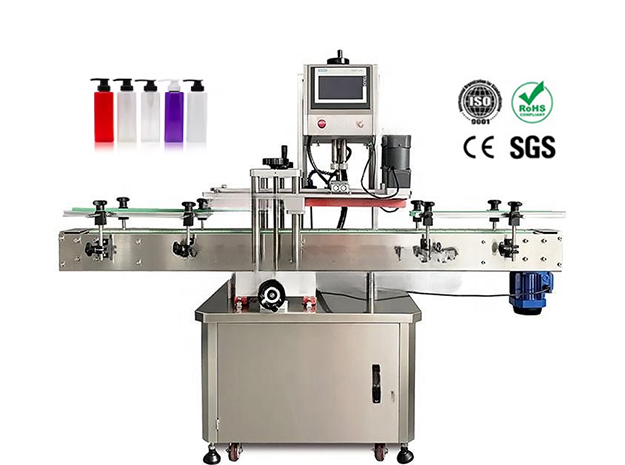
Semi-automatic can sealing machines require manual loading of cans and placement of lids. After the machine completes the sealing process, the cans are then manually removed. A typical semi-automatic can sealing machine can seal 10 to 20 cans per minute. It is simple to operate, and the price usually ranges from several thousand to twenty thousand yuan. The advantages of semi-automatic can sealing machines are mainly reflected in three aspects. First, the investment threshold is low. Compared to the tens of thousands or even hundreds of thousands of yuan for fully automatic equipment, semi-automatic can sealing machines can be purchased for several thousand yuan, making them suitable for small and micro enterprises or start-up brands with limited funds. Second, they are highly flexible. When changing can types, only the corresponding pressure head and roller mold need to be changed, and the switch can be completed in a few minutes, making it suitable for production modes with many product types and small batch outputs. Third, semi-automatic can sealing machines are easy to maintain. Their structure is relatively simple, lacking complex electrical control systems and conveyor belts, resulting in a low failure rate. Ordinary operators can perform daily maintenance after simple training. However, the limitations of semi-automatic can sealing machines are also obvious: their efficiency ceiling is relatively high, the speed of manual can loading and unloading limits overall production capacity, and operators are prone to fatigue during continuous operation, further reducing speed. If daily output exceeds 3000 cans, semi-automatic equipment struggles to meet the demand.
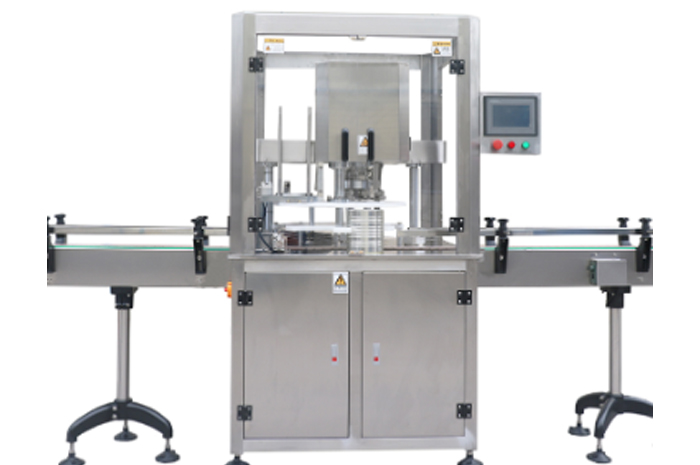
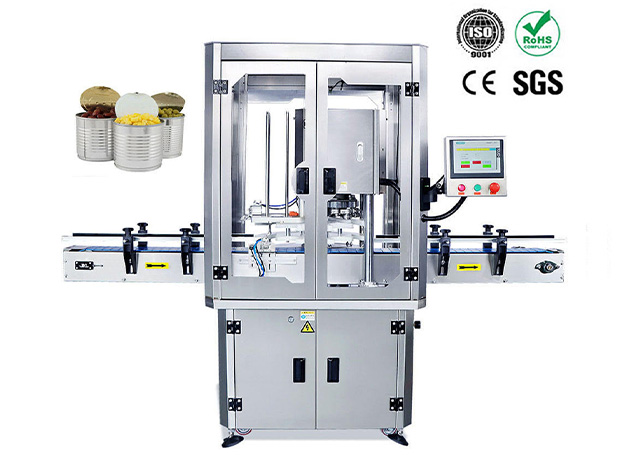
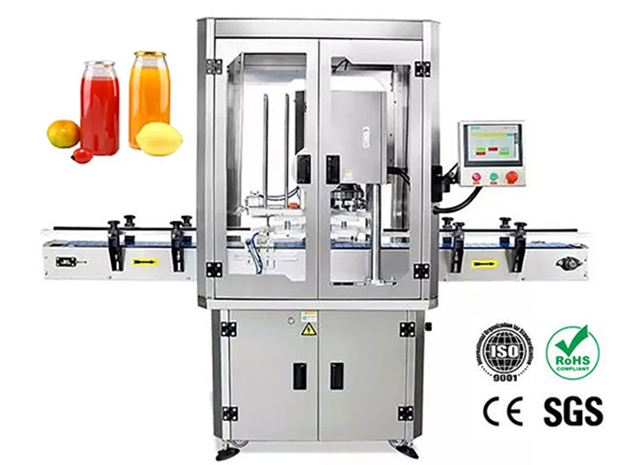
Fully automatic can sealing machines, on the other hand, complete the entire process automatically from can loading, cap delivery, sealing to can unloading, requiring no human intervention. A standard fully automatic can sealing machine can seal 30 to 60 cans per minute, 2 to 3 times faster than a semi-automatic one. The advantages of fully automatic can sealing machines are equally prominent. First, they are highly efficient with strong continuous production capacity, suitable for production scenarios with stable orders and large batches. One fully automatic machine can replace two to three semi-automatic machines, saving labor costs. Secondly, the sealing quality is stable. The machine's sealing force and roller trajectory are pre-set parameters, ensuring consistent action for each seal, eliminating fatigue and inattention, resulting in a significantly lower defect rate than manual operation. Thirdly, it can be integrated into production lines. Fully automatic can sealing machines can be linked with upstream filling machines and downstream labeling machines to form a complete automated production line, achieving unmanned operation from filling to sealing to labeling. However, fully automatic can sealing machines also have some limitations: higher investment costs, typically 30,000 to 80,000 yuan per machine; adjustments to multiple parts are required when changing can types, leading to longer changeover times compared to semi-automatic machines; and higher skill requirements for operators.
In comparison, semi-automatic can sealing machines are suitable for daily production of 500 to 3,000 cans, priced between 3,000 and 20,000 yuan. They are simple to operate, requiring only 5 to 10 minutes for can type changes, can be operated by one person, and while sealing consistency is generally lower, they are suitable for small-batch, multi-variety production. Fully automatic can sealing machines are suitable for daily production capacities of 3,000 to 15,000 cans, priced between 30,000 and 80,000 yuan. They have moderate operation difficulty, require 15 to 30 minutes to change cans, are monitored by one person, and offer high sealing consistency, making them suitable for large-volume, low-variety production.
In terms of specific selection, if your daily production is below 2,000 cans, with a wide variety of products, small batch sizes, and a limited budget, a semi-automatic can sealing machine is a more practical choice. If your daily production exceeds 5,000 cans, with stable orders, large batch sizes, a focus on efficiency and sealing consistency, and a long-term automation plan, a fully automatic can sealing machine is a more worthwhile investment. Another compromise is to start with a semi-automatic machine and upgrade to a fully automatic one as order volume increases, using the semi-automatic as a backup or for small-batch production.
There is no absolute superiority of semi-automatic or fully automatic; the key is whether it matches your actual needs. Small-batch production doesn't necessarily require a "one-step-up" approach. Starting with semi-automatic, building a solid foundation, and upgrading as scale increases is a common path for many successful companies. Henan Mingtan Import & Export Trading Co., Ltd. is a manufacturer specializing in the production and sales of packaging machinery. With a wealth of client experience, we have helped customers solve problems, increase output, and reduce labor costs for over a decade. If you would like to conduct a more specific selection evaluation based on your tank type, production capacity, and budget, please contact us. We can provide free consultation and trial operation services.