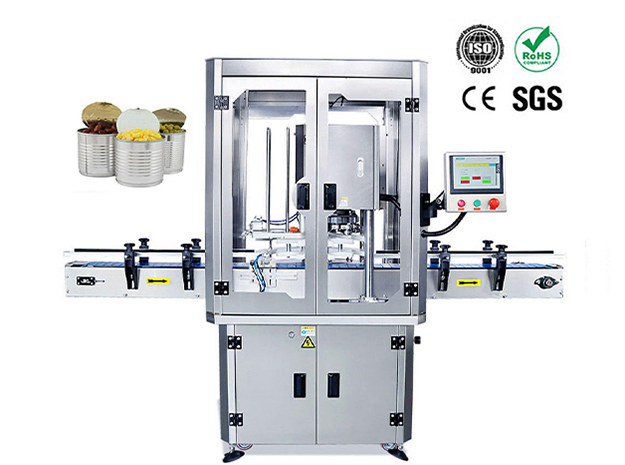
On filling production lines, one type of material causes headaches for many machines—viscous materials. From ketchup and honey in the kitchen to shampoo and shower gel in the bathroom, these products share common characteristics: high viscosity, poor flowability, easy adhesion to the filling wall, and a tendency to string or tail during filling. Ordinary filling machines either cannot fill them, fill them inaccurately, or do not fill them completely. Hydraulic filling machines are designed specifically for these "difficult" materials.
To understand why hydraulic filling machines are more suitable for viscous materials, we must first understand the problems encountered by ordinary equipment when handling such materials. The first difficulty is "difficulty in pushing." Viscous materials have high flow resistance, and the cylinder thrust of ordinary pneumatic filling machines is limited. When encountering high-viscosity materials, the piston thrust speed decreases significantly, leading to longer filling times, affecting overall line efficiency, and in extreme cases, even "clogging," requiring machine shutdown and cleaning. The second difficulty is "inaccurate filling." Due to the poor flowability of materials, ordinary filling machines are easily affected by material temperature and batch differences during the filling process, leading to fluctuations in filling volume. What might be accurate one day could be too much or too little the next. The third challenge is "dripping and stringing." Viscous materials easily remain on the filling nozzle; if not cleaned after filling, they will drip onto the bottle mouth or conveyor belt, causing contamination; or a "tailing" phenomenon may occur, with material hanging like threads between the bottle mouth and the filling nozzle, affecting the product's appearance.
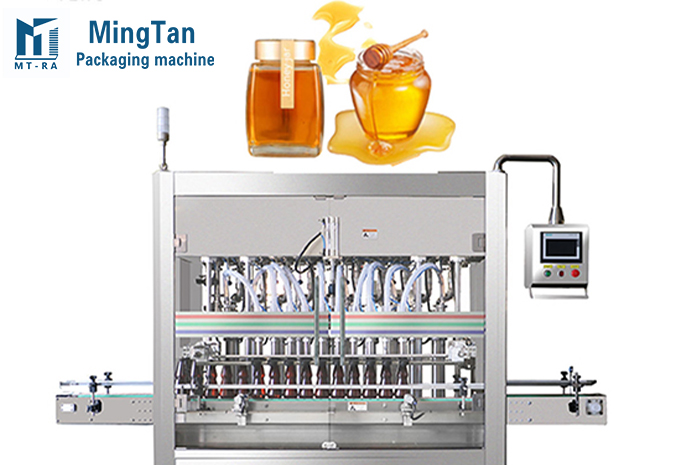
The core advantage of hydraulic filling machines lies in their power system. Unlike pneumatic systems, hydraulic systems can provide continuous and stable high-pressure output, maintaining a uniform filling speed even for materials as thick as toothpaste. This stability is key to solving the problems of "not being able to push" and "inaccurate filling." Take tomato sauce as an example, a high-viscosity material containing particles. In ordinary filling machines, particles easily clog the filling valve, leading to unstable filling volumes. Hydraulic filling machines, equipped with large-diameter filling valves and flexible piston movement, can achieve precise filling without damaging the integrity of the particles. The stable pressure of the hydraulic system ensures a highly consistent net content in every can of tomato sauce. Honey, on the other hand, is temperature-sensitive—it flows well at high temperatures and becomes very viscous at low temperatures. Ordinary pneumatic filling machines experience significant changes in filling volume when honey temperature fluctuates, while hydraulic filling machines automatically adjust pressure according to the load, maintaining a constant piston speed. Even if the honey's viscosity fluctuates due to temperature changes, the filling volume remains stable. For daily chemical products like shampoo, besides high viscosity, there are also requirements for the appearance after filling—the bottle opening must be clean, without stringing or tailing. Hydraulic filling machines are typically equipped with a back-suction filling valve, which can suck back any remaining material at the filling nozzle after filling, effectively preventing drips and stringing and keeping the bottle opening clean.
How effective is it in practice? Let the data speak for itself. Taking a condiment factory's tomato sauce bottling as an example, they previously used pneumatic filling machines, filling 500g bottles with an accuracy of approximately ±5g, and requiring cleaning the filling head every few hundred bottles. After switching to a hydraulic filling machine, the accuracy improved to within ±2g, and continuous production for a shift required no cleaning, increasing efficiency by over 30%. A daily chemical company bottling high-viscosity shampoo previously suffered from severe stringing and excessive residue at the bottle mouth, resulting in a packaging qualification rate of only 95%. After introducing a hydraulic filling machine equipped with a back-suction filling valve, the stringing problem was completely solved, and the packaging qualification rate increased to 99.5%.
For filling viscous materials like tomato sauce, honey, and shampoo, hydraulic filling machines offer a systematic solution. They use stable hydraulic power to solve the problem of "not being able to push," high-precision control to solve the problem of "inaccurate filling," and a back-suction valve to solve the problems of "dripping and stringing." If your product is also a viscous material that's difficult to handle, consider a hydraulic filling machine. It might solve your problem better than you think. For more technical specifications or to request filling tests specific to your material, please contact us.
Henan Mingtan Import & Export Trading Co., Ltd. is a manufacturer specializing in the production and sales of filling machines, capping machines, labeling machines, and other related equipment. We provide solutions for viscous, corrosive, and particulate materials. Contact us if you have any needs.