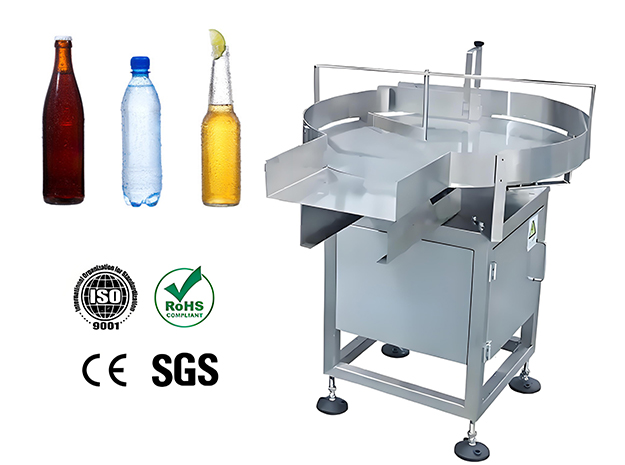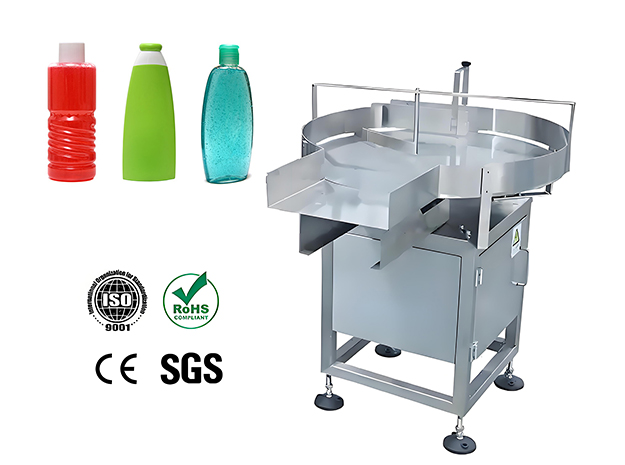
In the daily chemical industry, liquid products such as detergents, shampoos, shower gels, and hand sanitizers are among the largest and most competitive categories. The packaging production of these products, seemingly just "putting liquid into bottles," actually involves multiple challenges, including filling accuracy, leak-proof sealing, cap compatibility, production speed, and hygiene. A well-designed fully automated filling production line is key to solving these problems.
Daily chemical products such as shampoos, shower gels, and laundry detergents generally have high viscosity, poor flowability, and a tendency to foam. These characteristics present three typical challenges for filling. First, "difficulty in filling": high-viscosity materials have high flow resistance, and ordinary pneumatic filling machines lack sufficient thrust, resulting in slow filling speeds and even "flow interruptions" or "material blockages." Second, "inaccurate filling": high-viscosity materials are easily affected by temperature, thickening in winter and thinning in summer. If the equipment cannot adapt automatically, the filling volume will fluctuate, with some bottles of the same product containing more than others. Thirdly, there's the issue of "dripping and stringing." Material easily remains on the filling nozzle, forming a "tail" or dripping, contaminating the bottle mouth and conveyor belt, increasing subsequent cleaning costs.
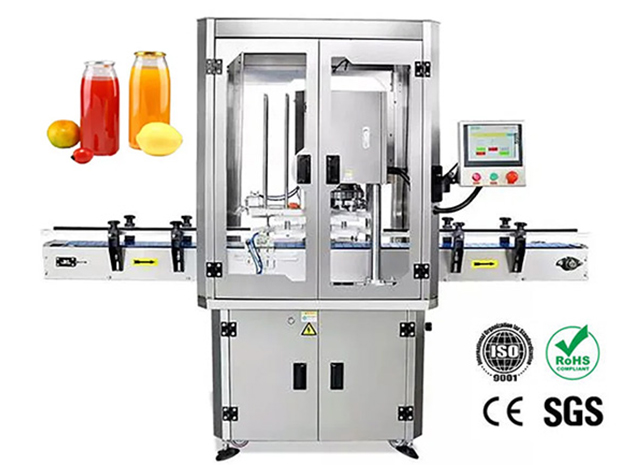
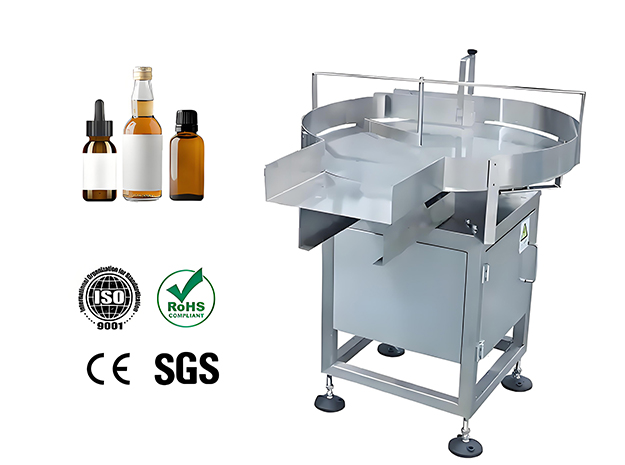
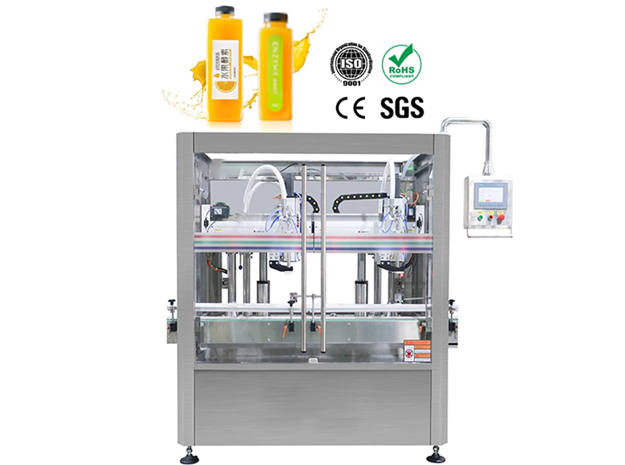
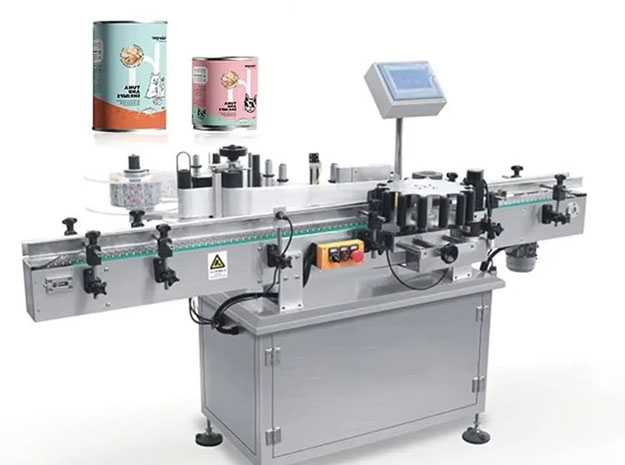
A standard fully automated daily chemical filling production line typically consists of several core modules. The filling machine is the heart of the line. Given the high viscosity of daily chemical products, piston filling machines are currently the most widely used choice. They use the reciprocating motion of a piston to dispense a precise amount of material, unaffected by viscosity changes, achieving filling accuracy within ±0.5%. For products with particularly high viscosity, hydraulic filling machines can be used, providing more stable high-pressure output. The capping machine handles the sealing process, equipped with a torque control system to ensure each cap is tightened to the set torque—neither too tight, causing damage, nor too loose, leading to leakage. The labeling machine applies labels to the bottles, and can be configured for double-sided or wrap-around labeling to adapt to different bottle types. The inkjet printer prints the production date and batch number on the bottle body or bottom, enabling product traceability. Each module is linked through a PLC control system. Operators can switch formulas, adjust parameters, start/stop, and automatically match speeds via a touchscreen. A 10-axis filling and capping machine, using PROFINET bus communication, can save 1 to 2 working days of wiring and troubleshooting time compared to traditional pulse control methods. Programming is simpler and scalability is greater.
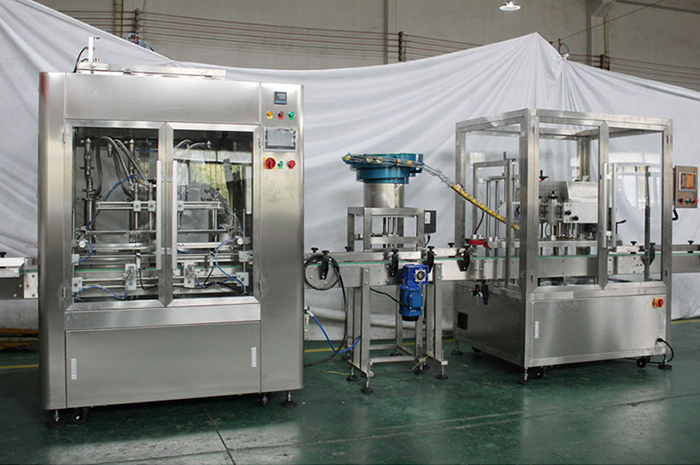
The efficiency improvement brought by automated filling lines is significant. Manual filling speed is approximately 10 to 15 bottles per minute, while automated lines can reach 60 to 120 bottles per minute, an efficiency increase of 4 to 8 times. A medium-sized fully automated production line can have a daily capacity of tens of thousands of bottles, equivalent to the workload of 30 to 50 workers. In terms of accuracy, the measurement error of the automated system is far lower than that of manual operation, controlling the material loss rate to within 0.1% to 0.5%. Taking a daily chemical company as an example, after introducing a fully automated line, the filling loss of liquid products decreased from 2% to 0.3%, saving over one million yuan in raw material costs annually. Hygiene is the bottom line in daily chemical production. Fully automated filling production lines utilize closed-loop pipeline transportation, and all parts in contact with materials are made of 304 or 316L stainless steel. Some high-end lines are also equipped with a CIP (Clean-in-Place) system, enabling high-temperature cleaning and disinfection of pipelines and filling heads, completing internal cleaning without disassembly.
The key to filling production of detergents, shampoos, and personal care products lies not in the sophistication of a single piece of equipment, but in the precise matching of the entire line to the characteristics of the materials. Choosing the right filling method, control system, and sealing solution, along with a well-designed overall line solution, is essential for achieving efficient, stable, and low-loss production. If you are planning a daily chemical filling production line, please contact us. We can provide customized complete line solutions based on your product characteristics, production capacity targets, and bottle type requirements.