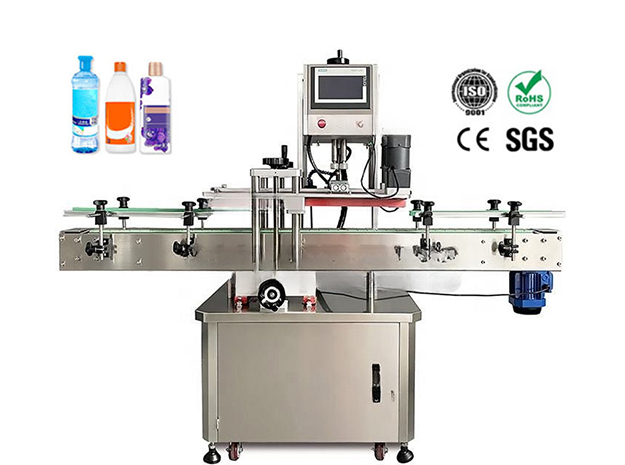
In international trade, the transport of packaging machinery often involves a complex interplay between buyer and seller regarding responsibilities, costs, and risk allocation. To standardize rules and minimize disputes, the International Chamber of Commerce (ICC) established the *International Commercial Terms* (Incoterms), providing a clear framework for the division of responsibilities in global trade. For goods such as packaging machinery—which are high-value, involve long supply chains, and often require multimodal transport—accurately understanding the risk transfer point associated with each Incoterm is not only crucial for contract negotiations but also fundamental to ensuring transaction security and avoiding unexpected losses.
I. What is the Risk Transfer Point?
The "risk transfer point" refers to the specific moment in time and geographical location during transport when the risk of loss or damage to the goods shifts from the seller to the buyer. Once this point is passed, the buyer bears the risk for any incidents occurring during transit—such as collisions, overturning, theft, or damage caused by adverse weather. Therefore, clearly defining this point determines who is responsible for insuring the goods and who bears liability for compensation in the event of loss; it serves as the fundamental basis for allocating responsibilities between the buyer and the seller.
According to Incoterms? 2020, the 11 terms are categorized into two groups: those applicable to any mode of transport (including multimodal transport) and those applicable solely to sea and inland waterway transport. Given the diverse transport methods used for packaging machinery—often involving combinations of road, sea, and air transport—enterprises must carefully select the appropriate term based on their specific transport plan.
II. The Progression of Risk Transfer Points: From EXW to DDP
The risk transfer points follow a clear progression along the transport chain, ranging from the seller's minimum responsibility to their maximum responsibility:
1. EXW (Ex Works) — Earliest Risk Transfer
Under EXW terms, the risk transfers as soon as the seller places the goods at the buyer's disposal at the seller's factory or warehouse. The seller is only required to have the goods ready; the buyer is responsible for arranging pickup, loading, export customs clearance, and all subsequent transportation. This term entails the least responsibility for the seller; however, for the buyer, it means assuming full risk from the moment the goods leave the factory gate. For packaging machinery, using EXW may expose the buyer to significant operational risks if they lack a reliable logistics network in the country of export.
2. FCA (Free Carrier) – Flexible delivery points for multimodal transport
FCA is applicable to any mode of transport. Risk transfers when the seller delivers the goods to the carrier designated by the buyer; the seller is responsible for export clearance, while the buyer bears the costs and risks of the subsequent main carriage. FCA is often more suitable than FOB for packaging machinery requiring multimodal transport (e.g., a combination of road and sea freight).
3. FAS (Free Alongside Ship) – Specific to sea transport
FAS applies only to sea or inland waterway transport. Risk transfers to the buyer when the seller places the goods alongside the vessel at the port of shipment; the seller is not responsible for the actual loading onto the ship. This term is suitable for scenarios requiring alongside-ship handover, such as bulk cargo or large components of packaging machinery.
4. FOB, CFR, CIF – "Loading onto the vessel" as the common threshold
These three maritime terms share the same risk transfer point: risk passes to the buyer when the goods are loaded onto the vessel at the port of shipment. The differences lie solely in the allocation of costs:
- FOB: The seller bears costs incurred prior to loading, while the buyer covers freight and insurance;
- CFR: The seller pays the freight, yet risk still transfers upon loading;
- CIF: In addition to freight, the seller must purchase transport insurance for the buyer.
It is crucial to note that although CIF includes an insurance obligation, the seller's risk liability terminates upon loading and does not extend to the destination port. In practice, a common misconception is that "the seller purchasing insurance implies they are responsible for safety throughout the entire journey."
5. CPT, CIP – "Freight-paid" terms for multimodal transport
- CPT (Carriage Paid To): The seller pays the freight to the designated destination, but risk transfers to the buyer as soon as the goods are handed over to the first carrier. The separation of cost responsibility and risk transfer is a key point that is frequently misunderstood in practice. - CIP (Carriage and Insurance Paid To): Similar to CPT, but the seller is also required to procure "All-Risk" insurance for the buyer, offering a higher level of coverage.
6. DAP, DPU, DDP — Delivery at Destination
These three terms involve the latest transfer of risk and place the greatest responsibility on the seller:
- DAP (Delivered at Place): Risk transfers when the goods arrive at the designated destination and are ready for unloading by the buyer; the buyer is responsible for import customs clearance;
- DPU (Delivered at Place Unloaded): Risk transfers after unloading is completed at the destination (renamed from DAT to DPU in the 2020 revision);
- DDP (Delivered Duty Paid): The seller bears all risks and costs associated with delivering the goods to the buyer's designated location, completing import customs clearance, and paying taxes/duties; risk transfers only upon final delivery, making this the term with the highest level of seller responsibility.
III. Recommendations on Term Selection for Packaging Machinery and Equipment Transport
Given the characteristics of packaging machinery and equipment—such as high value, large size, and diverse transport methods—the following three points should be prioritized when selecting terms:
First, avoid using FOB, CFR, or CIF for transport methods other than sea freight. These three terms are strictly limited to transport by ship; using them incorrectly for air or land transport may not only trigger disputes over contract interpretation but also hinder insurance claims. General terms such as FCA or CPT should be prioritized for air or land transport scenarios.
Second, it is crucial to distinguish between "cost allocation" and "risk transfer." Taking CPT as an example: although the seller pays the full freight cost to the destination, the risk transfers as soon as the goods are handed over to the first carrier. The buyer must arrange insurance promptly after the goods are handed to the carrier, rather than waiting until the goods arrive at the destination port.
Third, pay attention to the premature transfer of risk caused by the buyer's responsibilities. If the buyer fails to dispatch a vessel or designate a carrier on time, the risk may transfer to the buyer **earlier** than usual under certain conditions. For instance, under FOB terms, if the buyer's vessel fails to arrive at the port on schedule and the goods are damaged while waiting in the port area, the buyer bears the risk. IV. The Relationship Between the Transfer of Risk and Insurance Obligations
The point at which risk transfers directly determines which party bears the obligation to arrange insurance. Under terms where risk transfers at the place of export (such as EXW, FCA, FOB, CFR, and CPT), the buyer typically arranges insurance; conversely, under CIF and CIP terms, the seller is obligated to purchase transport insurance for the buyer. However, it is important to note that even when the seller assumes the insurance obligation, the point of risk transfer remains unchanged—insurance serves merely as a financial compensation mechanism following the occurrence of a risk, rather than altering the allocation of risk itself.
Conclusion
The international transport of packaging machinery is essentially a process of dynamically allocating risks, costs, and responsibilities between the buyer and the seller. From the seller’s factory under EXW, to the carrier handover point under FCA, to the ship-loading stage under FOB/CIF, and finally to delivery at the destination under DDP, the point of risk transfer shifts progressively further along the transport chain. A clear understanding of the "division point" inherent in each term not only facilitates choices that align with one's own interests during contract negotiations but also provides a solid basis for insurance arrangements, logistics planning, and contingency strategies—thereby ensuring controllable risks and smooth transactions in international trade.
We work with long-standing freight forwarding partners to ensure that cargo transport is safe, fast, and hassle-free.